The six Fintiv Factors are weighed against each other, and are:
Whether the court granted a stay or evidence exists that one may be granted if a proceeding is instituted
Proximity of the court’s trial date to the Board’s projected statutory deadline for a Final Written Decision
Investment in the parallel proceeding by the court and the parties
Overlap between issues raised in the petition and in the parallel proceeding
Whether the petitioner and the defendant in the parallel proceeding are the same party
Other circumstances that impact the Board’s exercise of discretion, including the merits.
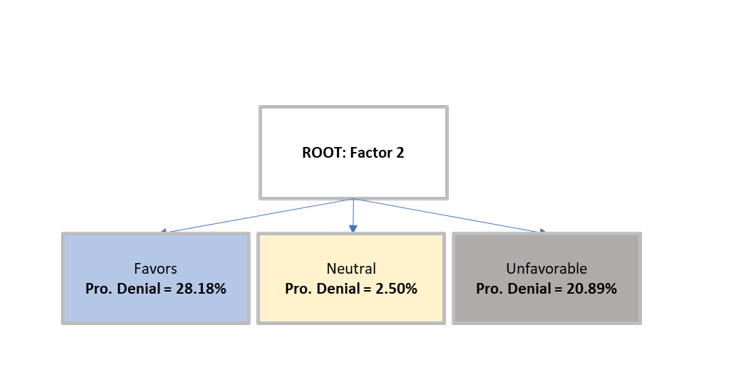
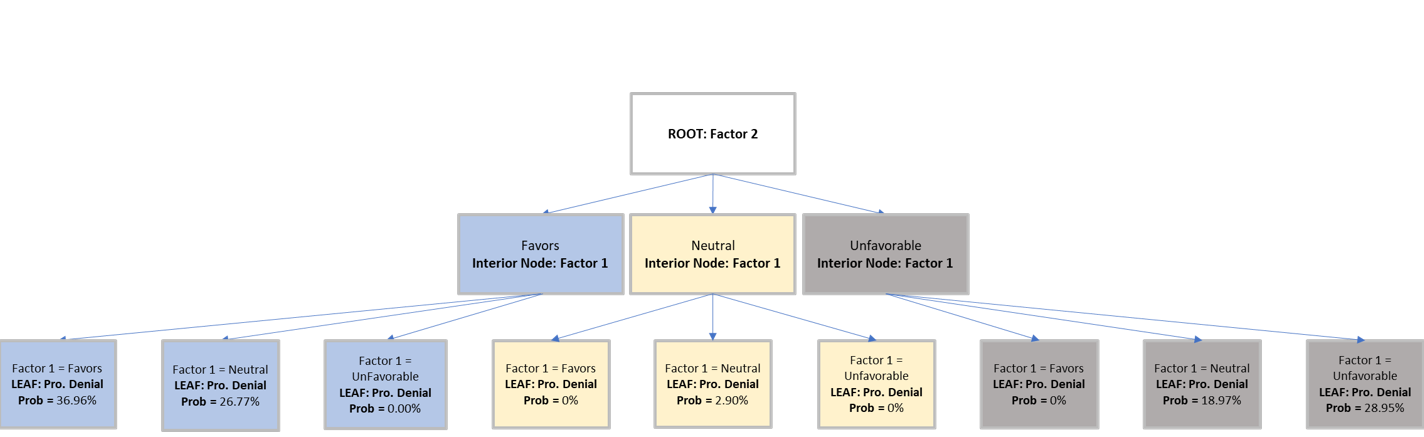
For Factor 1, as stated by the Fintiv panel itself, “[a] district court stay of the litigation pending resolution of the PTAB trial allays concerns about inefficiency and duplication of efforts.” Thus, a stay of the district court litigation “has strongly weighed against exercising the authority to deny institution.” Regarding Factor 2, “if the court’s trial date is earlier than the projected statutory deadline” for a Final Written Decision, Factor 2 has often weighed in favor of exercising authority to deny institution. However, “if the court’s trial date is at or around the same time as the projected statutory deadline…or even significantly after the projected statutory deadline, the decision whether to institute will likely implicate other factors.” For Factor 3, the panel analyzes “the amount and type of work already completed in the parallel litigation,” with a particular emphasis on whether the district court has already entered any substantive orders. As for Factor 4, when an IPR petition contains “the same or substantially the same claims, grounds, arguments, and evidence” as the district court litigation, there are “concerns of inefficiency and the possibility of conflicting decisions.” Regarding Factor 5, when the defendant in the parallel district court proceeding is the same as the petitioner in the IPR, this factor has generally weighed in favor of discretionary denial. Lastly, Factor 6 acts as a catch-all provision for any case-specific arguments that may weigh for or against the Board’s exercise of discretion.
The raw data for this analysis was scraped from published opinions from the PTAB website. All PTAB institution decisions from 2021 that cited the Fintiv factors in the opinion were scraped. The Unified Patents team focused on 2021 out of convenience. After downloading the qualifying opinions, we noted the following data points for each qualifying opinion: a) the total pages of the opinion; b) the pages spent focusing on analyzing the Fintiv Factors; c) the outcome of each factor such as favorable to denial, unfavorable to denial, or neutral; and d) the overall outcome of whether the petition was denied or instituted. It should be noted that Unified solely focused on the first 5 Fintiv factors, with the catch-all provision being ignored since it could not be classified easily.
When looking at the length of institution decisions, a natural pattern was evident. On average, granted institution decisions were 20-25 pages longer than any other outcome. In procedural denials under Fintiv, the Fintiv sections typically ran under 12 pages and encompassed, on average, more than half of the decision itself. While the number of pages does not conclusively denote the outcome, it can generally provide an indication of where the board places priority in the decisions.