PORTAL

World's Largest Wi-Fi 6 Training Set Used in First Ever AI-derived Landscape

Unified's OPAL (Objective PAtent Landscape) report was designed to address asymmetries in the licensing of standard essential patents and to create a more fair and transparent patent licensing process around core patents supporting next waves of consumer technology growth.
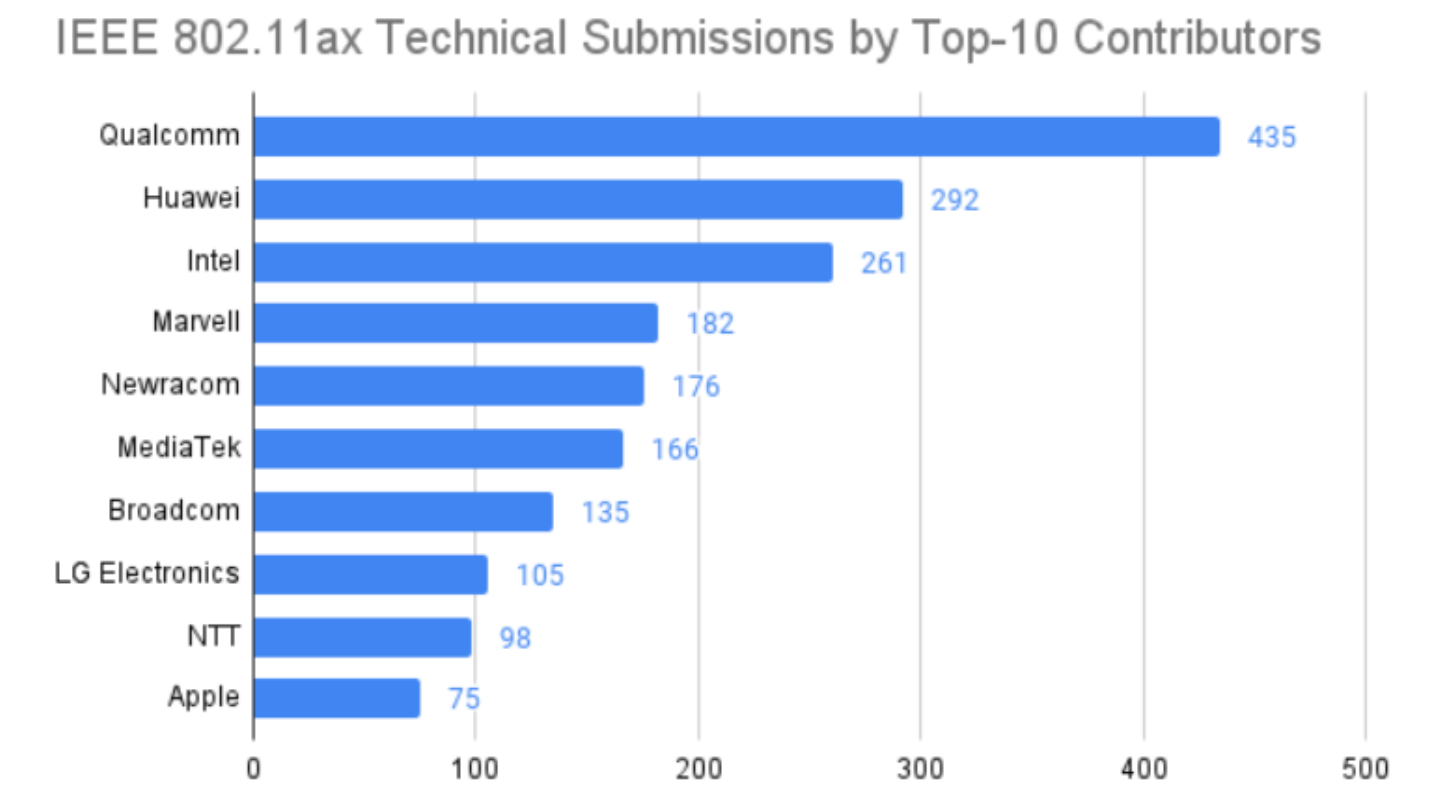
According to OPEN, Unified Patents’ IEEE standards submissions database, over 7,182 technical contributions have been submitted. These top 10 contributors account for 27% of all technical contributions.

The Wi-Fi 6 “OPAL” tool objectively scores the statistical essentiality of patent publications to Wi-Fi 6 functionality. It was created using a machine learning algorithm trained on a large set of expert reviewed Wi-Fi 6 patents. A short summary of OPAL’s methodology follows:

  • Universe of Patents Subject to Analysis - 3.6M+ applications and granted patents potentially relevant to Wi-Fi 6

  • Patents Evaluated Manually by Experts - 3,000+ unique families evaluated manually by technical experts at Scintillation Research

  • AI Training - Patents were vectorized using FastText, and a binary classification algorithm was trained to predict essentiality to the universe of patents

  • ML Performance - Training complied with accepted machine learning practices and the results achieved a high F-1 score of 0.99

Read more about Wi-Fi 6 OPAL’s report and methodology HERE. If you have any questions, please contact info@unifiedpatents.com.

Unified Patents Launches IETF OPEN

Unified Patents is pleased to announce OPEN’s IETF Standard Submission Portal. The Internet Engineering Task Force (IETF) is largely responsible for how the internet operates and is vitally important to how various devices use the internet. Common areas of focus for the IETF include Internet Protocols, APIs, and Routing, (i.e. architecture and backbone of how the internet works). Users can now search all the submissions related to IETF via full-text or by author and source. The submission portal includes over 86,000 documents that are full-text searchable.

The internet standards process includes proposing specifications, developing standards based on agreed-upon specifications, coordinating independent testing and revising proposals based on testing results.

In addition to the ability to search, Portal provides high-level analytics to provide transparency and clarity on submissions to better improve the Internet. Users have the availability to understand the landscape clearly based on the search criteria.

World’s most comprehensive Opposition data now available

Unified Patents’ Portal now includes foreign opposition data with access to the dockets. At the current moment the data covers the United Kingdom, Germany, European Patent Office, and Japan. Specifically portal includes:

Users can now filter down by specific forum using the sidebar.

Once a given jurisdiction is selected, the Patent List will display all patents involved in an opposition in that jurisdiction.

From there, Users can select a given patent and view the docket with links to the actual documents.

Users will also have high-level analytics to understand the filings over time and top parties.

Tracking Innovation: Using Unified’s Portfolio Velocity Tool

Unified’s Portal has added a new component to its Portfolio analysis tab that allows companies to be compared in terms of accelerated or decelerated innovation based on CPC codes.

Innovation Velocity uses two key metrics: ▲ Velocity - the total sum of patents per class code within the last 10 years; and ▲% Velocity - the percentage of change over a given time period. The Innovation Velocity formula is:


The Final Number of Patents specifically looks at years 2017-2022, while the Initial Number of Patents looks at years 2012-2022. By using these parameters, the tool is able to overcome the natural “dark period” of time within the U.S. patenting process. The dark period refers to the 18 months from which an application is filed to the day it is published. These 18 months make it extremely difficult to understand a portfolio’s trajectory because naturally there will be a decline in publicly available application/patent information. By using the formula, the most recent years are aggregated together to get a holistic view of the number of patents over a given time period and measured against the previous years. This provides a glimpse to either the growth or the decline in a specific classification code.

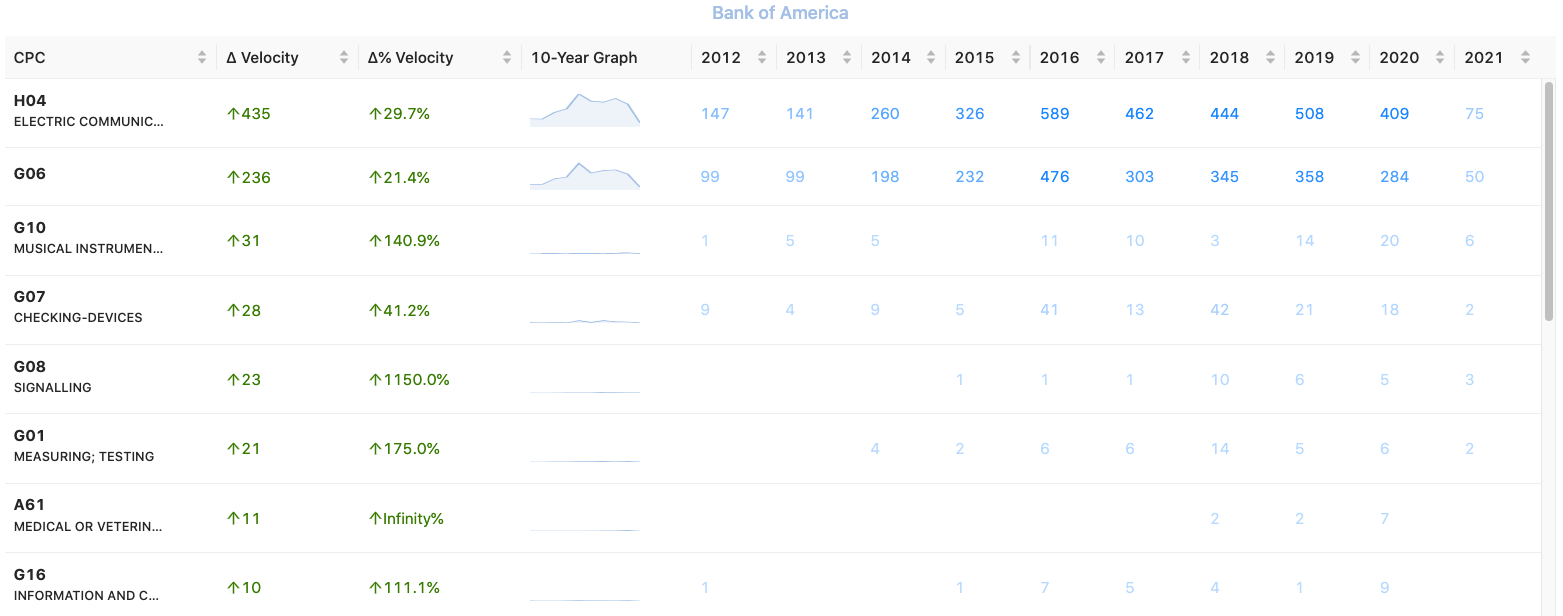
As an example, we can compare Bank of America’s portfolio against JP Morgan Chase in terms of patenting trends, The Innovation Velocity tool allows users to see the general patenting trends for the top CPC codes, with the total being aggregated. Included are the CPC, ▲ Velocity, ▲% Velocity and a ten year graph to show the general trend.

Users then can see the number of patents granted, within each CPC, on the timeline over a specific time period. The patent count is hyperlinked back to Portal’s Patent Search where more analysis could be done on the set of patents.

Users can also view the macro trends of a company, but looking at all the top CPCs and see an aggregate total for the entire company.

Since CPCs tend to be generic and broad, Unified’s Portal provides the same analysis on the CPC Subclass.

Innovation Velocity not only helps companies understand their specific portfolio, but this tool allows users to compare their portfolio with others to understand both the macro and micro trends of their patenting strategy.

LPIX - Moneyball for the Best Prosecution Firms

Identifying good patents is tough. Figuring out who drafts the best applications is even harder. Unified’s Portal offers a fast approach in looking at patent prosecution success by analyzing law firms, examiners, and art units. Our current set of data consists of over 3,100 law firms in their respective art units, covers over 3 million office actions dating back to 2008, and analyzes over 1.7 million patents. Members can now compare outcomes between law firms, visualize examiner track records, or find the most prosecuted and/or successful art units in a given technology. Watch a quick video to find out more:

https://vimeo.com/692374418